


An arrest for family violence can turn your life upside down in an instant. Beyond the immediate stress of court appearances and potential jail time, a permanent mark on your record can create long-term obstacles. It affects your ability to secure employment, rent an apartment, or even retain your constitutional right to own a firearm. If you are facing these high stakes, you need clear answers from an experienced Domestic Assault Lawyer who understands how the Texas criminal justice system operates.
Many individuals assume that if a case is dismissed or if the complaining witness chooses not to cooperate, the record automatically disappears. Unfortunately, this is a common misconception. A domestic assault criminal record does not vanish on its own. To clean your record, you must go through a formal legal process. Depending on how your case was resolved, you may be looking at an expunction or a petition for non-disclosure. Knowing the rules governing whether you can expunge domestic assault charge Texas records is critical to protecting your future.
Understanding the Difference: Expunction vs. Nondisclosure
Before exploring the legal criteria, it is essential to distinguish between the two primary methods used to clear or hide a background check in Texas: expunction and orders of nondisclosure.
An expunction is the most complete form of relief available under the law. When a court grants an expunction order, public and private entities must completely destroy all physical and digital files relating to your arrest and prosecution. Once the process is finished, you can legally deny that the arrest ever occurred.
An order of nondisclosure operates differently. It does not destroy the files. Instead, it seals the record from the general public. While private employers and landlords will not see the incident during a routine background check, law enforcement agencies, state licensing boards, and federal authorities will still have full access to it.
Can Family Violence Charges Be Expunged?

The short answer is yes, but only under very narrow and specific circumstances. Texas law is notoriously strict regarding violent crimes and domestic offenses. Under the Texas Code of Criminal Procedure Chapter 55, you generally qualify for an expunction only if your case resulted in a non-conviction and you did not serve community supervision.
You may be eligible to completely clear your record if any of the following apply to your case:
- Acquittal at Trial: If you take your case to trial and a judge or jury finds you not guilty, you have an immediate statutory right to file for an expunction.
- Straight Dismissal or Case No-Billed: If the prosecution dismisses your charges before a trial, or if a grand jury issues a no-bill for a felony offense, you may file for an expunction. However, you must wait for the applicable statute of limitations to expire unless the prosecutor agrees to an early expunction. For misdemeanor domestic violence, the statute of limitations is three years from the date of the offense. For felony offenses, it is five years.
- Pretrial Diversion Programs: If you successfully complete a formal pretrial diversion program authorized by the District Attorney, and your charges are completely dismissed as a result, you are typically eligible to have the records erased.
Conversely, if you pled guilty, pled no contest, were found guilty at trial, or received a sentence of straight probation, you are permanently barred from obtaining an expunction for that charge.
The Problem with Deferred Adjudication and Nondisclosure
In many criminal cases, defense attorneys negotiate a plea deal known as deferred adjudication. This is a special type of probation where the judge defers a finding of guilt while you complete community supervision. If you finish the terms successfully, the judge dismisses the case. For many offenses, completing deferred adjudication makes you eligible for an order of nondisclosure to seal your record from the public.
However, domestic violence is treated differently. Under Texas Government Code Section 411.074, any offense involving family violence is explicitly disqualified from receiving an order of nondisclosure. This creates a severe trap for unrepresented individuals or those working with inexperienced counsel. If you accept a deferred adjudication plea deal for an assault family violence charge, that arrest and the subsequent probation will remain on your record permanently. It cannot be expunged because you participated in community supervision, and it cannot be sealed because the law forbids a nondisclosure domestic assault Texas order.
According to the official legal compliance guidelines published by the state court administration:
“A person may not be granted an order of nondisclosure of criminal history record information under this subchapter and is not entitled to petition the court for an order of nondisclosure under this subchapter if the court makes an affirmative finding that the offense for which the order of nondisclosure is requested involved family violence.”
This quote from the Texas Judicial Branch highlights why the initial defense strategy is so critical. A bad plea deal can permanently cement an allegation on your record, even if the case is eventually dismissed after probation.
Why You Need an Experienced Domestic Assault Lawyer in Fort Bend County
Because the consequences of a conviction or a deferred adjudication plea are permanent, your defense strategy must focus on achieving a total dismissal, a pretrial diversion agreement, or an acquittal. This is where local representation becomes invaluable. A dedicated domestic assault lawyer in Fort Bend County understands how local prosecutors handle family violence cases.
In Fort Bend County, the District Attorney’s office reviews domestic allegations thoroughly. It is a common belief that a spouse or partner can call the police, change their mind the next day, and simply drop the charges. In reality, Texas prosecutors pursue a “no-drop” policy. Once the police make an arrest, the state takes over the prosecution. The victim does not have the power to dismiss the case. To protect your record and keep the door open for a future expunction, your defense counsel must proactively build an evidentiary case to demonstrate holes in the state’s narrative, locate inconsistencies, or secure an invitation into a formal diversion program.
The Steps to File an Expunction in Texas
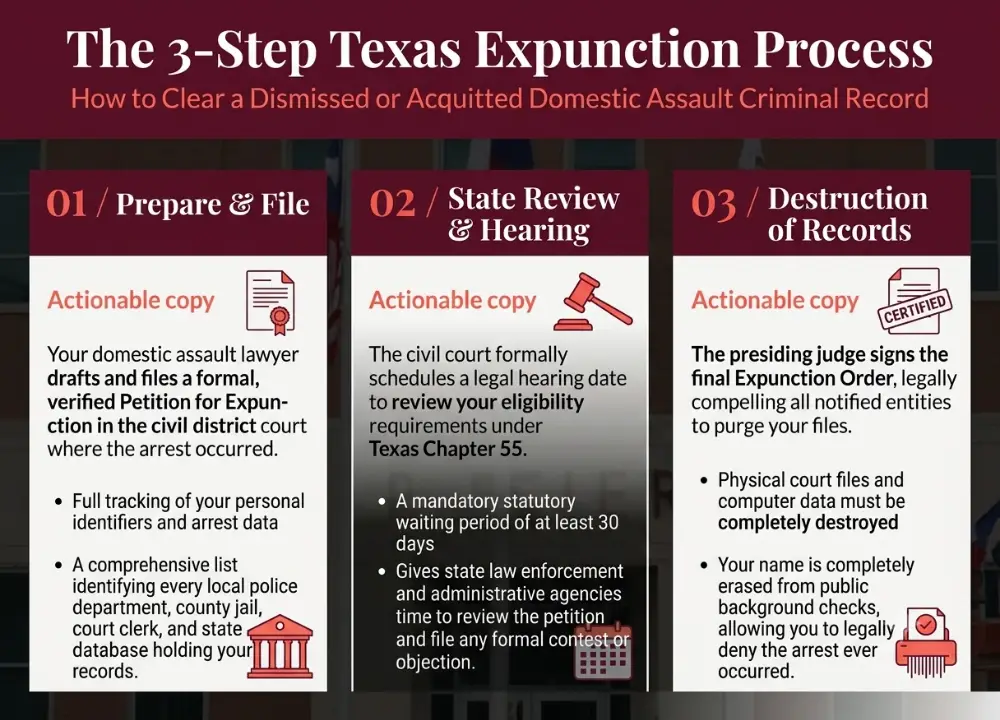
If your case was dismissed or you were acquitted, the record does not automatically disappear. You must actively petition the court to clear your name. The expunction process involves several formal steps:
- Filing the Petition: Your attorney files a verified Petition for Expunction in the civil district court of the county where you were arrested. This petition must detail your personal data, details of the arrest, and list every law enforcement agency, jail, court, and state database that holds a record of the event.
- The Court Hearing: The court sets a hearing date, typically at least 30 days after the filing. This allows the state agencies time to review the request and raise any objections.
- The Final Order: If the judge signs the Expunction Order, it is served to all listed agencies. By law, these entities must gather their records and destroy them, purging your name entirely from their electronic systems.
Navigating this process carefully ensures that no administrative agency is missed, keeping your background completely clean for future background checks.
If you or a loved one are facing family violence allegations, acting quickly is the most important step you can take. Consulting with the David Hunter Law firm can help you evaluate your legal options, identify whether your case qualifies for relief, and build a defense targeted at keeping your record clear.
Texas Family Violence Statistics: According to data compiled by the Texas Council on Family Violence, Texas law enforcement agencies respond to tens of thousands of domestic disturbance calls annually, resulting in thousands of permanent criminal records that severely impact future employment opportunities for individuals who fail to secure a complete legal dismissal or acquittal.
Legal Disclaimer
The information provided is for educational and informational purposes only. The information on this website is not intended as legal advice and should not be used as a substitute for consulting a licensed attorney. Legal outcomes and laws can vary by jurisdiction, and only a qualified lawyer can provide guidance tailored to your situation.