


Going through a separation or divorce is emotionally challenging on its own. When you add a child custody battle and a Driving While Intoxicated (DWI) charge to the equation, panic often sets in. You might be asking yourself: Will a DWI make me lose my children? How will this impact my divorce proceedings?
When DWI and child custody Texas cases intersect, the legal stakes become exceptionally high. Understanding how Texas family courts evaluate alcohol or drug offenses, and how criminal charges impact your DWI and custody rights, is essential to protecting your relationship with your children.
How Texas Courts Evaluate Child Custody
In Texas family law, custody is officially referred to as conservatorship. Texas family courts operate under a primary legal mandate: determining what outcome serves the best interest of the child.
According to the Texas State Directory Family Code, courts focus on safeguarding the health and safety of minor children above all else when appointing conservators:
“The best interest of the child shall always be the primary consideration of the court in determining the issues of conservatorship and possession of and access to the child.”
When deciding whether to grant Joint Managing Conservatorship or Sole Managing Conservatorship, family court judges and custody evaluators assess several key factors, including:
- Each parent’s ability to provide a safe, stable, and nurturing environment.
- The physical and emotional needs of the child now and in the future.
- Financial stability, personal background, criminal history, and evidence of substance abuse.
- The child’s personal preference regarding primary residence if the child is 12 years of age or older.
For children under the age of 12, parents and the court make the custody determination without direct preference input from the child.
How a DWI Charge Impacts Custody Rights in Texas
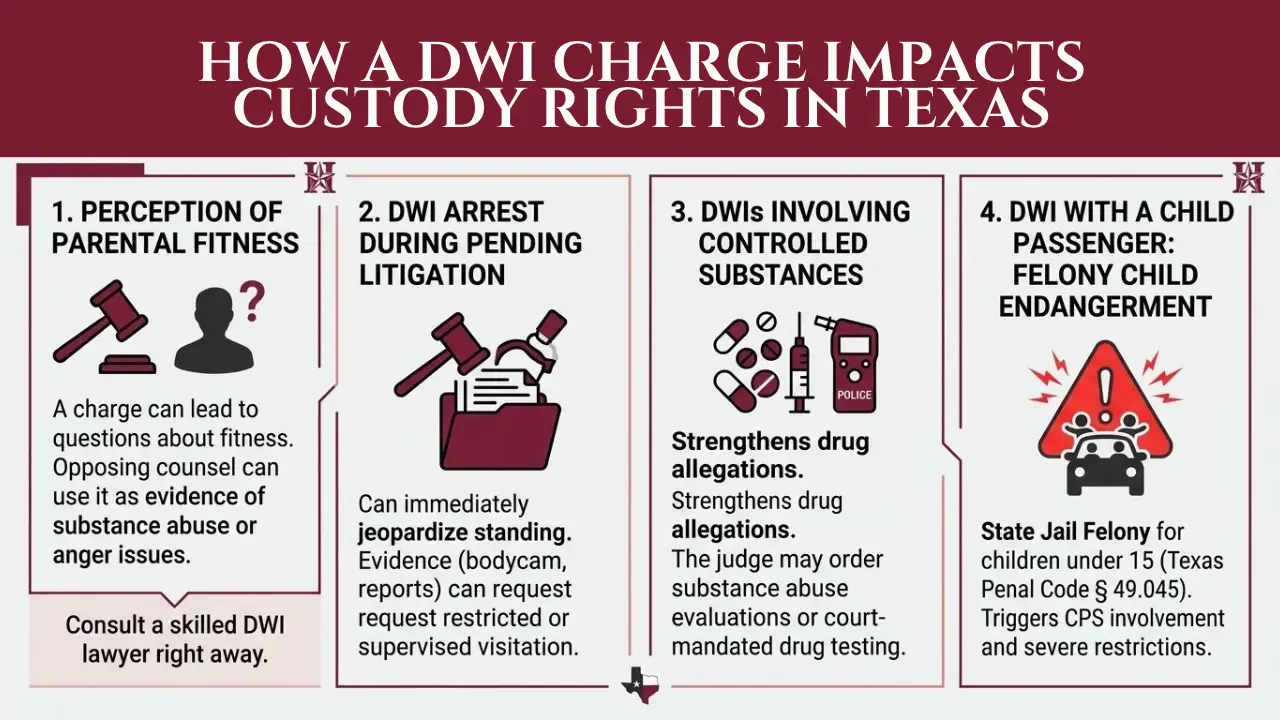
Because Texas courts prioritize child safety, an active or past DWI arrest can create significant obstacles when fighting for your parental rights.
1. Perception of Parental Fitness
A DWI charge involving alcohol, marijuana, or legally prescribed medications can lead the court or child custody evaluators to question your fitness as a parent. Opposing counsel often uses DWI charges as evidence of underlying substance abuse or anger management issues, arguing that your home may not represent a safe environment for the children. If you need representation, consult a skilled DWI lawyer right away.
2. DWI Arrest During Pending Custody Litigation
If a DWI arrest occurs while your custody case is actively pending in family court, it can immediately jeopardize your legal standing. Even if you are ultimately found not guilty in criminal court, the opposing party may leverage the arrest report, officer bodycam footage, or demeanor during the arrest to request restricted or supervised visitation.
3. DWIs Involving Controlled Substances
Facing a DWI associated with illegal narcotics or prescription drugs can strengthen drug allegations made against you. The judge may order substance abuse evaluations or court-mandated drug testing, further complicating your custody battle.
4. DWI With a Child Passenger: Felony Child Endangerment
The most severe scenario occurs if a child under the age of 15 is in the vehicle at the time of your arrest. In Texas, DWI with a Child Passenger under Texas Penal Code § 49.045 is an automatic State Jail Felony carrying severe criminal penalties and automatic triggers for Child Protective Services (CPS) involvement. This charge can severely restrict your custodial rights and endanger your parental relationship.
Will Deferred Adjudication or an Older Record Save Your Custody Case?
Many parents wonder if resolving a DWI without a formal trial conviction will safeguard their DWI conviction child custody standing:
- Deferred Adjudication & Probation: Entering a probation agreement allows you to avoid a formal conviction upon successful completion. However, the initial DWI arrest remains visible on background checks and court records reviewed by family law judges.
- Pre-Parental or Older Records: If a DWI occurred years before you became a parent, or if the record was sealed through an Order of Nondisclosure, its impact on current proceedings is generally reduced, provided there is no ongoing pattern of alcohol or drug abuse.
Family court judges make determinations based on current circumstances, meaning your immediate response and conduct following an arrest matter immensely.
Steps to Protect Your Parental Rights After a DWI Arrest
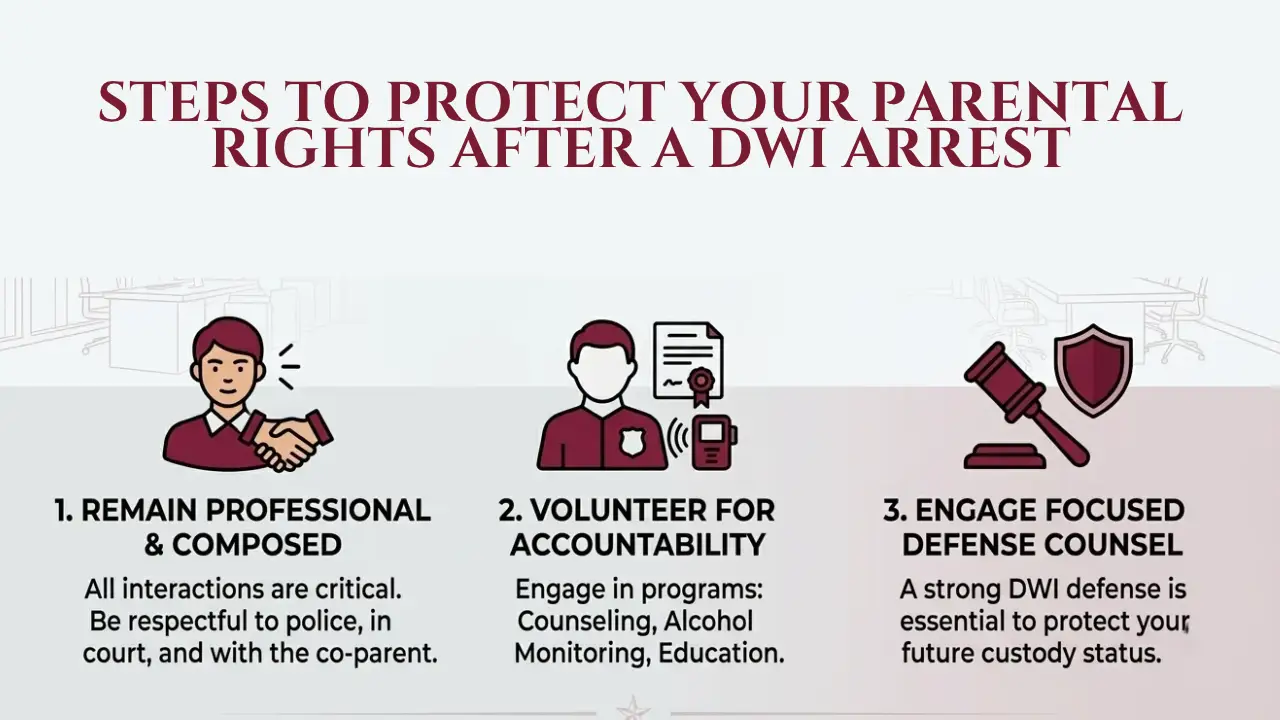
If you are facing questions about can a DWI affect child custody in Texas, taking immediate, strategic steps is vital:
- Maintain Composure and Maturity: Your conduct during and after an arrest is critically evaluated. Maintain a calm, respectful demeanor in all police interactions, court appearances, and communications with the co-parent.
- Demonstrate Responsibility: Voluntarily participating in alcohol education programs, counseling, or continuous alcohol monitoring demonstrates a proactive commitment to your children’s well-being.
- Secure Focused DWI Defense Representation: Successfully fighting or minimizing your criminal charges directly improves your position in family court.
Why You Need a Local Fort Bend County DWI Defense Attorney
Navigating criminal proceedings while protecting your parental rights requires experienced legal defense. Relying on court-appointed attorneys, who often manage heavy caseloads across multiple courtrooms, may limit the time and detailed focus required for your defense.
To safeguard your freedom and your family, you need a DWI lawyer Sugar Land TX residents rely on, who brings deep familiarity with local court systems and prosecutorial procedures in Fort Bend County.
Former Judge and Prosecutor David Hunter brings over 30 years of experience within the Fort Bend County court system. Having presided over courtroom proceedings, David Hunter understands how judges evaluate DWI charges and builds tailored defense strategies to protect your future and family rights.
Talk to Fort Bend County DWI Attorney David Hunter Today
A DWI charge does not automatically mean losing your children. If you are facing DWI charges in Sugar Land, Richmond, Rosenberg, or across Fort Bend County, secure experienced criminal defense counsel immediately.
Contact the David Hunter Law Firm today to discuss your defense options:
- Call Direct: 281-265-1515 (Available 24/7)
- Online Consultation: Schedule Your Free Consultation at DavidHunterLawFirm.com
Child Impaired Driving Statistics: According to data published by the Centers for Disease Control and Prevention (CDC), approximately 25% of all traffic fatalities involving children aged 14 and younger in the United States involve an alcohol-impaired driver, underscoring why Texas courts enforce strict scrutiny on alcohol-related offenses in child custody matters.